

Estates and inheritances
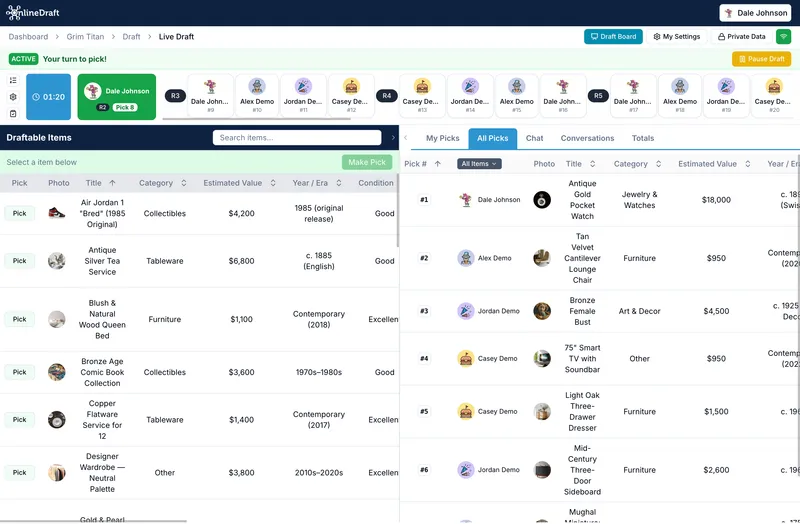
Catalog the property with photos, appraised values, and condition so every party sees the same information.
See estate draftsSolution / Organizations
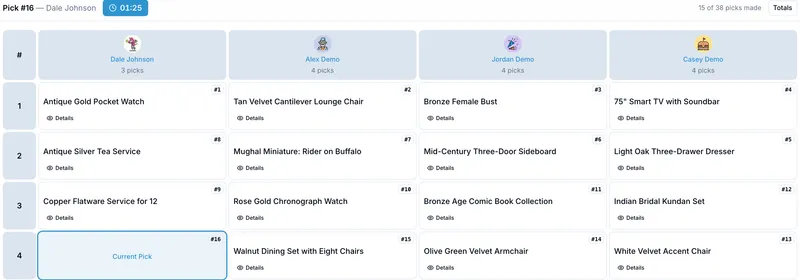
When heirs or partners must divide what can't be split, run a neutral draft — private preferences, a fair order, and a documented result.

Where it fits
Any matter where several parties must select from one pool. Each has a guide of its own.
Catalog the property with photos, appraised values, and condition so every party sees the same information.
See estate drafts
Two parties, one pool, alternating picks — the same process that settles an estate settles a split.
See what else gets drafted
Generate the selection order rather than negotiating it, including when shares aren't equal.
How the order is builtWhy counsel use it
The process carries the fairness, so no party is arguing with you about it afterward.
Each party ranks what they want privately — no one ever sees who wanted what.
Every selection is logged in order, ready to reference in the settlement.
In your conference room or three time zones apart — the draft runs the same way.
Where to go next
Keep it simple for the parties and defensible for the file.
Set up a draft for the matter at hand and walk through it before you propose it.